 Nguồn Suối Tâm Linh


Kinh Thánh nói gì về việc xăm mình-thân thể bị cắt xẻ?
Luật pháp Cựu ước truyền lệnh cho dân Y-sơ-ra-ên: “Chớ vì kẻ chết mà cắt thịt mình, chớ xâm vẽ trên mình: Ta là Ðức Giê-hô-va.” (Lê-vi-ký 19:28) Tuy nhiên, mặc dù tín hữu ngày nay không ở dưới luật pháp Cựu Ước (Rô-ma 10:4; Ga-la-ti 3:23-25; Ê-phê-sô 2:15) Sự thực rằng có một luật chống lại việc xăm mình nên mới có câu hỏi cho chúng ta. Kinh Thánh Tân Ước không đề cập gì về một tín hữu nên hay không nên xăm mình.
Trong mối liên hệ với xăm mình và cắt xẻ thân thể, cách kiểm tra tốt nhất là xem quyết định như vậy có ngay thẳng, có ý thức tốt để cầu xin Chúa ban phước và sử dụng những hành động đặc biệt cho mục đích tốt lành của chính Ngài: “Vậy, anh em hoặc ăn, hoặc uống, hay là làm sự chi khác, hãy vì sự vinh hiển Ðức Chúa Trời mà làm.” (I Cô-rinh-tô 10:31) Kinh Thánh không ra lệnh chống lại việc xăm mình hay cắt xẻ thân thể. Nhưng Kinh Thánh cũng không cho chúng ta một lý do nào để tin rằng Đức Chúa Trời cho phép chúng ta xăm mình hay cắt xẻ thân thể.
Vấn đề khác cầm xem xét là mức độ bình thường. Kinh Thánh hướng dẫn chúng ta phải ăn mặc giản dị. (1 Ti-mô-thê 2:9). Một người có vẻ bề ngoài khiêm tốn trong cách ăn mặc là mọi thứ trên thân thể được che phủ bởi y phục cách thỏa đáng. Tuy nhiên ý nghĩa chủ yếu của sự giản dị là không quá chú trọng đến bản thân mình. Những người ăn mặc giản dị thể hiện cách sống không quan tâm đến chính họ. Xâm mình và cắt xẻ thân thể cho biết một người chỉ quan tâm đến mình. Trong tình trạng này người xâm mình hay cắt xẻ thân thể không phải là người khiêm tốn.
Một qui luật quan trọng trong Kinh Thánh về những vấn đề mà không có ghi chép cụ thể là nếu điều ấy có chỗ làm nghi ngờ không biết Chúa có vui lòng không thì cách tốt nhất là đừng làm việc ấy. “Phàm làm điều chi không bởi đức tin thì điều đó là tội lỗi.” (Rô-ma 14:23) Chúng ta cần nhớ thân thể cũng như linh hồn chúng ta đã được cứu chuộc và thuộc về Đức Chúa Trời. Mặc dầu I Cô-rinh-tô 6:19-20 không trực tiếp áp dụng cho việc xăm mình hay cắt xẻ thân thể nhưng những câu Kinh Thánh này cho chúng ta một qui luật “Anh em há chẳng biết rằng thân thể mình là đền thờ của Ðức Thánh Linh đang ngự trong anh em, là Ðấng mà anh em đã nhận bởi Ðức Chúa Trời, và anh em chẳng phải thuộc về chính mình sao? Vì chưng anh em đã được chuộc bằng giá cao rồi. Vậy, hãy lấy thân thể mình làm sáng danh Ðức Chúa Trời.” Sự thật vĩ đại này cho phép chúng ta mang thân thể thật sự của mình để làm hay đi nơi đâu đều vì danh Chúa. Nếu thân thể chúng ta thuộc về Đức Chúa Trời chúng ta phải chắc chắn nghe rõ ràng sự cho phép của Chúa trước khi chúng ta xăm mình hay cắt xẻ thân thể.
Kinh Thánh nói gì về việc xăm mình-thân thể bị cắt xẻ?
What does the Bible say about tattoos?


Tattoos are more popular than ever in many parts of the world. The number of people with tattoos has increased dramatically in recent years. Tattoos are not just for delinquents or rebels anymore. The edginess of rebellion historically associated with tattoos is starting to wear off.
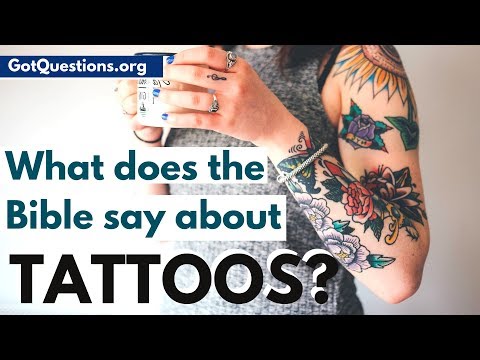
The New Testament does not say anything about whether or not a believer in Jesus Christ should get a tattoo. Therefore, we cannot say that getting a tattoo is a sin. Because of Scripture’s silence, getting inked falls under the category of a “gray area,” and believers should follow their convictions in the matter, respecting those who may have different convictions.
Here are some general biblical principles that may apply to getting a tattoo:
◦ Children are to honor and obey their parents (Ephesians 6:1–2). For a minor to get a tattoo in violation of his or her parents’ wishes is biblically unsupportable. Tattoos born of rebellion are sinful.
◦ “Outward adornment” is not as important as the development of the “inner self” and should not be the focus of a Christian (1 Peter 3:3–4). A person who desires a tattoo to garner attention or draw admiration has a vain, sinful focus on self.
◦ God sees the heart, and our motivation for anything we do should be to glorify God (1 Corinthians 10:31). Motivations for getting a tattoo such as “to fit in,” “to stand out,” etc., fall short of the glory of God. The tattoo itself may not be a sin, but the motivation in getting it might be.
◦ Our bodies, as well as our souls, have been redeemed and belong to God. The believer’s body is the temple of the Holy Spirit (1 Corinthians 6:19–20). How much modification of that temple is appropriate? Is there a line that should not be crossed? Is there a point at which the proliferation of tattoos on one body ceases to be art and starts becoming sinful mutilation? This should be a matter of individual reflection and honest prayer.
◦ We are Christ’s ambassadors, delivering God’s message to the world (2 Corinthians 5:20). What message does the tattoo send, and will it aid or detract from representing Christ and sharing the gospel?
◦ Whatever does not come from faith is sin (Romans 14:23), so the person getting the tattoo should be fully convinced that it is God’s will for him or her.
We cannot leave the discussion of tattoos without looking at the Old Testament law that prohibited tattoos: “Do not cut your bodies for the dead or put tattoo marks on yourselves. I am the LORD” (Leviticus 19:28). The reason for the prohibition of tattoos in this passage is not stated, but it is likely that tattooing was a pagan practice connected with idolatry and superstition. It was probably common for the pagans to mark their skin with the name of a false god or with a symbol honoring some idol. God demanded that His children be different. As He reminded them in the same verse, “I am the LORD.” The Israelites belonged to Him; they were His workmanship, and they should not bear the name of a false god on their bodies. While New Testament believers are not under the Mosaic Law, we can take from this command the principle that, if a Christian chooses to get a tattoo, it should never be for superstitious reasons or to promote worldly philosophy. The bottom line is that getting a tattoo is not a sin, per se. It is a matter of Christian freedom and should be guided by biblical principles and rooted in love.
What does the Bible say about tattoos?


